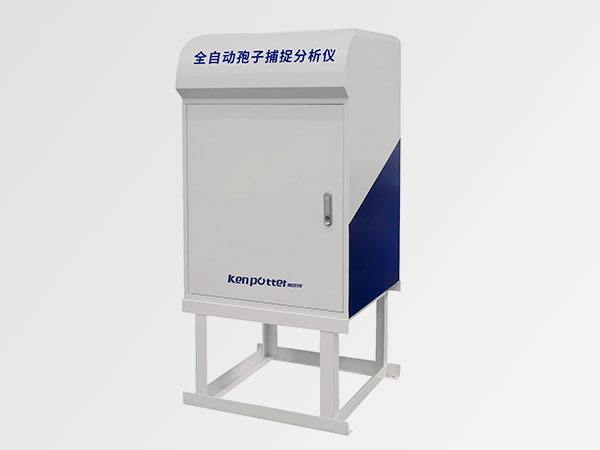
The spore detector, also known as the intelligent spore capture and analysis instrument, is a specialized detection device developed based on airflow sampling, microscopic imaging, artificial intelligence recognition, and Internet of Things transmission technology. It primarily captures fungal pathogen spores and pollen particles diffusing in the air with airflow, accurately monitors the concentration and transmission dynamics of pathogen spores, and breaks the traditional lagging disease prevention and control mode of field inspection. It is an indispensable early warning equipment in the fields of smart agriculture, plant protection and forecasting, and forestry quarantine, facilitating green prevention and control of crops and reducing pesticide use while enhancing efficacy.
Spore Detector
Traditional agricultural disease monitoring has long relied on manual inspection of diseased plants in the field and visual identification of disease symptoms. This approach can only detect diseases after crop lesions appear, by which time the pathogen spores have already completed widespread infection, greatly reducing the effectiveness of chemical control and potentially leading to excessive pesticide application. The transmission logic of airborne diseases involves spore floating, landing and infection, latent disease development, and symptom manifestation, with the entire cycle typically lasting 7 to 10 days. A spore detector directly identifies the source of disease - the pathogenic spores floating in the air - allowing for a one-week advance prediction of disease outbreak risk, truly achieving "preventive measures before disease occurrence and precise pesticide application", shifting from reactive management to proactive prevention.
The core workflow of the equipment is divided into five major steps: air collection, sample retention, microscopic photography, intelligent recognition, and cloud uploading. The instrument is equipped with an internal negative pressure air duct circulation system that extracts ambient air with a constant airflow. The air intake filter screen filters dust and debris, allowing tiny spores to adhere precisely to the long-lasting glass slide. A dual-axis precision motor drives the glass slide to move at a constant speed, completing sample collection within a set time period. The built-in high-magnification optical microscope lens, paired with a CMOS sensor with 5 million or more pixels, enables clear observation of various spore morphologies within a range of 5~100 micrometers. It automatically turns on a circular light supplement at night to ensure uninterrupted imaging and sampling for 24 hours. After collection, the equipment automatically captures sample images and uploads the footage to an agricultural cloud platform via 4G, Ethernet port, or WiFi. Relying on deep learning AI algorithms, it automatically distinguishes between dozens of common disease spores such as rice blast, rust, powdery mildew, gibberella, downy mildew, etc., automatically counts the number of spores, calculates the environmental spore concentration, and eliminates irrelevant impurities such as pollen and debris. The overall recognition accuracy rate can reach over 95%.
In terms of hardware structure and practical performance, the entire machine adopts a rust-proof spray-painted box, featuring rainproof, dustproof, and high and low temperature resistance. It can operate stably in outdoor environments ranging from -20℃ to 70℃, making it suitable for open-air deployment in fields, orchards, and tea gardens. The power supply supports dual modes of 220V mains power and solar photovoltaic power, allowing long-term operation even in mountainous woodlands without grid coverage. The carrier glass belt consumables have outstanding endurance, with a single replacement enabling continuous use for an entire year. The device automatically tracks the remaining amount of consumables and sends a remote replacement reminder when it is close to depletion, greatly reducing the frequency of manual maintenance. The body is equipped with a touch display screen, supporting local parameter settings, manual/automatic mode switching, and customizable sampling duration. Managers can remotely control the device's start and stop, retrieve historical images, and view disease data reports without needing to arrive at the field. Equipped with GPS positioning function, it facilitates multi-site grid monitoring and management.
The application scenarios of the spore detector cover multiple fields. In the agricultural sector, it is used in wheat, rice, corn, fruit and vegetable, tobacco, and Chinese herbal medicine planting bases for targeted monitoring of epidemic diseases such as stripe rust, rice false smut, and grape downy mildew. In the forestry sector, it is used for landscaping, shelterbelts, and economic forest tree quarantine to prevent the widespread spread of fungal diseases in trees. In addition, it can also be used for air pollen concentration monitoring, serving as an environmental warning for allergic rhinitis, as well as customs plant quarantine for entry and exit, intercepting the invasion of harmful fungal spores from outside.
In the context of modern agricultural large-scale development, many regions have established spore monitoring stations in high-standard farmland, crop protection service stations, and agricultural and rural monitoring and reporting systems, forming a regional disease early warning big data network. By long-term aggregation of spore spatiotemporal distribution data, combined with environmental factors such as field temperature and humidity, wind speed, and precipitation, a disease epidemic prediction model is constructed to precisely determine the window period for pesticide application, reducing land pollution and pesticide residues in agricultural products caused by blind spraying. As the basic instrument for the digital transformation of crop protection, the spore detector, with its advantages of automation, intelligence, and networking, promotes the scientific and refined prevention and control of crop pests and diseases, providing solid technical support for stable grain production and sustainable ecological agricultural development.