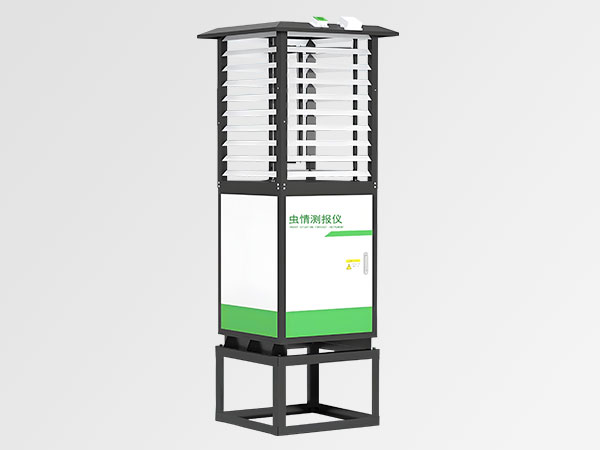
The insect pest detector, also commonly known as the intelligent insect pest monitoring lamp, is a modern plant protection monitoring device that integrates optical attraction, infrared insect killing, high-definition photography, IoT transmission, and AI intelligent recognition. It primarily targets field nocturnal phototactic agricultural pests for all-weather trapping, collection, photography, and data upload, replacing traditional manual field pest inspection, lamp trapping, manual sorting, and statistics, which are outdated monitoring methods. It is widely used in high-standard farmland, fruit and vegetable plantations, tea gardens, woodlands, and plant protection monitoring stations, enabling early detection, early warning, and early treatment of pests, thereby assisting in cost reduction and efficiency improvement in agricultural production and reducing pesticide usage.
Traditional pest monitoring mainly relies on agricultural technicians conducting regular field patrols and visually observing the number of insect eggs, larvae, and adults in the fields. This approach not only consumes a lot of manpower but is also highly susceptible to limitations imposed by weather, terrain, and patrol scope. Often, pest outbreaks are only detected after a large area is affected, missing the optimal prevention and control period. After old-fashioned light traps lure insects, workers need to go to the field daily to retrieve the insects, manually sort, count, and classify them. This process is inefficient, prone to data errors, and difficult to meet the needs of large-scale planting and regional joint prevention and control of pests and diseases. The pest detection instrument operates automatically from the trapping process to data analysis, eliminating the need for frequent on-site personnel. It enables real-time monitoring of pest population dynamics in the fields, transforming pest prevention and control from passive disinfection and sterilization to active prediction.
Pest detection instrument
The entire equipment operation process is divided into five steps: attracting insects, killing, drying, photographing, and uploading for identification. The instrument utilizes the phototactic characteristics of pests, equipped with a dedicated frequency-vibrating light source for attracting insects, to precisely lure most nocturnal agricultural pests such as the rice stem borer, rice planthopper, cutworm, diamondback moth, corn borer, and scarab beetle into the interior of the equipment. Once the pests enter the channel, they are quickly killed through far-infrared high-temperature treatment to avoid the impact of escaping or decaying pest bodies on sample integrity. Subsequently, a built-in constant temperature drying device dehydrates and dries the pest bodies to prevent mold growth and adhesion, ensuring clear subsequent photographic images. The equipment is equipped with a high-definition industrial camera that periodically captures panoramic images of the trays carrying pest samples, and relies on 4G wireless network to push the original images to the cloud management platform in real time. The back-end artificial intelligence system relies on a massive pest sample database to automatically identify pest species, count the number of individual pests, and generate daily and weekly pest situation reports, eliminating invalid samples such as weed debris and moth debris. The identification accuracy meets the standards for grassroots plant protection monitoring and reporting work.
The equipment exhibits strong outdoor adaptability, featuring a thickened rain-proof and dust-proof shell. It is capable of resisting lightning strikes, exposure to sunlight, and rain and snow, allowing it to operate stably for extended periods in wild environments ranging from sub-zero temperatures to high temperatures in midsummer. The power supply mode is flexible, allowing it to be connected to 220V mains power for continuous supply. In remote areas without power grids, it can be paired with solar panels and battery packs to achieve pure photovoltaic self-powered operation, making it suitable for use in mountainous orchards, forest areas, and large fields. The equipment allows for customizable opening periods, light-attracting durations, and photo-taking frequencies. It comes with GPS positioning, and when multiple devices are networked, a grid-based pest monitoring network can be established. Managers can remotely view pest data at specific locations and receive early warning reminders for pest infestation thresholds on a computer or mobile phone app. The collected insect trays can be automatically emptied, and some models support sample retention functions, facilitating offline review and identification by agricultural technicians.
Its application scenarios are extensive. In major grain-producing areas, it is used for routine monitoring of pests in rice, wheat, and corn fields. In fruit and vegetable bases, it conducts targeted monitoring and reporting for common lepidopteran and coleopteran pests on vegetables and fruit trees. For forestry departments, it serves as a warning system for forest pests and diseases, preventing the spread of forest pests such as pine caterpillars. Additionally, it is a standard equipment in the pest monitoring and warning system of agricultural and rural departments. By accumulating long-term pest data, combined with environmental parameters such as temperature, humidity, rainfall, and wind direction, it can analyze the breeding cycle and migration patterns of pests, precisely determine the application area and optimal application time, avoid large-scale blind spraying of pesticides, effectively reduce pesticide usage, mitigate soil and water pollution, and enhance the quality of agricultural products.
In the current era of comprehensive promotion of smart agriculture, the insect pest detector, as a digital infrastructure for crop protection, has opened up a link between field insect pest data collection and information management, greatly reducing the work pressure on grassroots crop protection personnel, improving the timeliness and accuracy of pest and disease monitoring and reporting, and providing strong technical support for food security, stable crop production and harvest, as well as the development of green ecological agriculture.