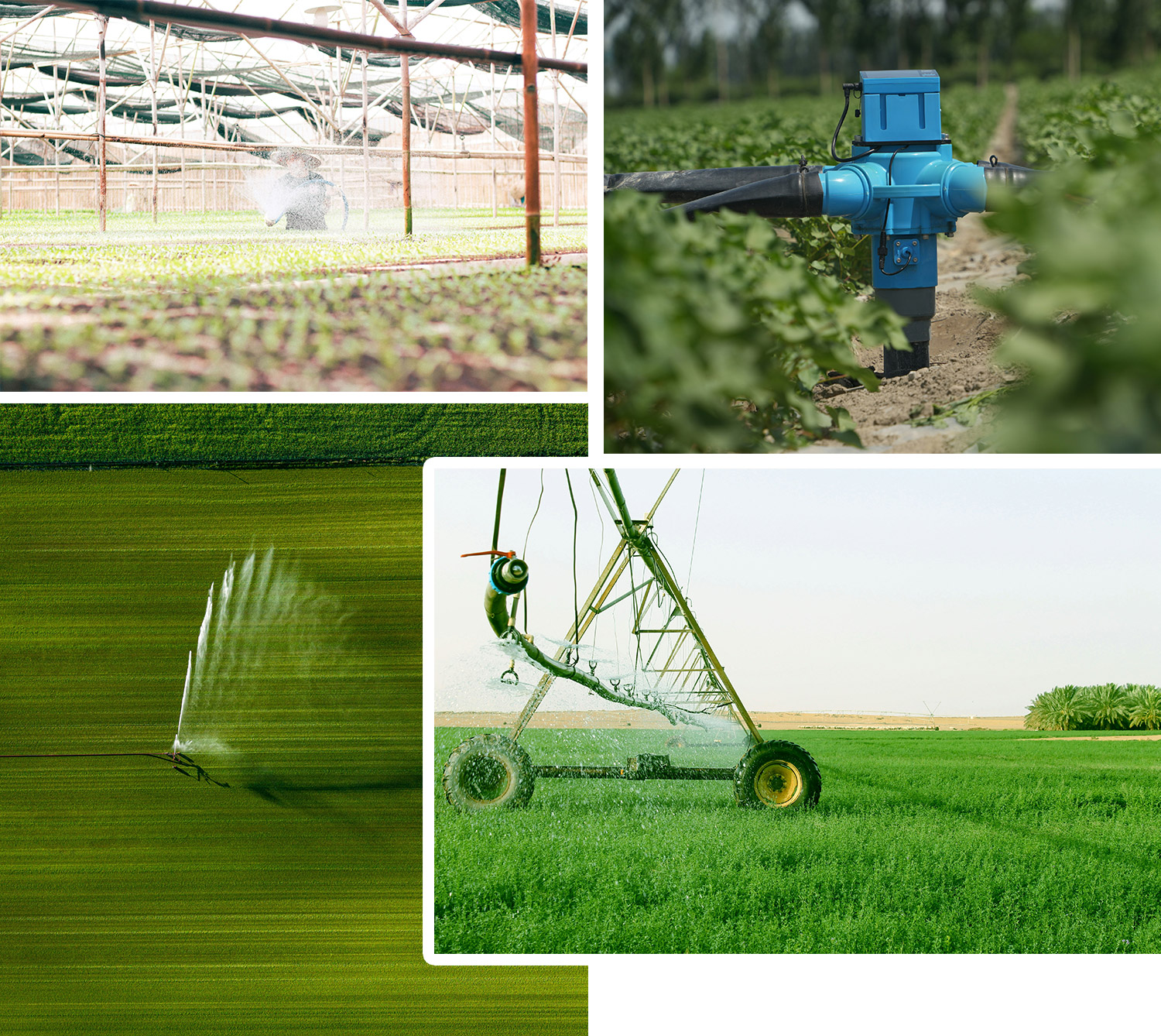
The digital agricultural operating system serves as an integrated digital platform tailored for modern agriculture. It seamlessly integrates the Internet of Things, satellite remote sensing, artificial intelligence, GIS technology, and specialized agricultural models. By breaking down data barriers across farmland equipment, farming management, industrial services, and government supervision, it facilitates digital and intelligent control throughout the entire agricultural production chain, from pre-production to post-production. This system stands as a pivotal vehicle for transitioning traditional agriculture towards precision agriculture.
Based on the "integrated perception of air, space, and ground," the system deploys soil, meteorological, and water-fertilizer sensors in the field, paired with drone patrols and satellite remote sensing, to collect dozens of data items such as soil moisture, temperature, light, and crop growth conditions 24 hours a day, forming a dynamic digital archive of farmland. Relying on the 5G network, the data is uploaded to the cloud in real time, breaking the pain points of low efficiency and large errors in judgment based on experience in traditional manual inspections. Mobile phones, tablets, and central control screens can all view the production status of the entire park in real time, with automatic push notifications for alerts in case of abnormalities.
Intelligent decision-making and automatic control are core capabilities. The system incorporates a large-scale crop growth model, which automatically generates personalized farming plans based on soil, variety, and climate data of the plot. The integrated water and fertilizer machine, ventilation roller shutter, and Beidou agricultural machinery can receive remote linkage instructions from the platform, providing precise water and fertilizer supply as needed, saving 30% of water and 20% of fertilizer compared to traditional methods. AI image recognition can predict pests and diseases in advance, pushing low-loss prevention and control plans to reduce pesticide abuse. In the field scenario, the system generates variable operation prescriptions to guide sowing, fertilization, and plant protection machinery to operate in different zones, significantly reducing labor input and stabilizing crop yields.
The system also supports the management of the entire industry chain. Before production, it can integrate centralized purchasing channels for agricultural resources to reduce planting costs. During production, it records all farming operations. After production, it incorporates a blockchain traceability module to assign unique digital tags to agricultural products. Consumers can scan the tags to view the entire process records of planting, harvesting, and processing, thereby enhancing the brand value of agricultural products. For government entities, the system integrates modules for farmland monitoring, disaster prevention and early warning, and industry statistics. It enables inspections of farmland conversion to non-grain crops, emergency response to agricultural disasters, and supports digital governance of county-level agriculture.
Compared to fragmented agricultural software, digital agricultural operating systems possess advantages such as unified compatibility and modular scalability. They can adapt to various scenarios including greenhouses, large-scale fields, orchards, and aquaculture, catering to the diverse needs of smallholders, family farms, industrial parks, and agricultural authorities. By replacing empirical farming with data-driven practices, they effectively address issues such as resource waste, high labor costs, and the disconnect between production and marketing. They continuously unleash new productive forces in agriculture and serve as a key infrastructure for promoting rural revitalization and achieving green and efficient agricultural development.