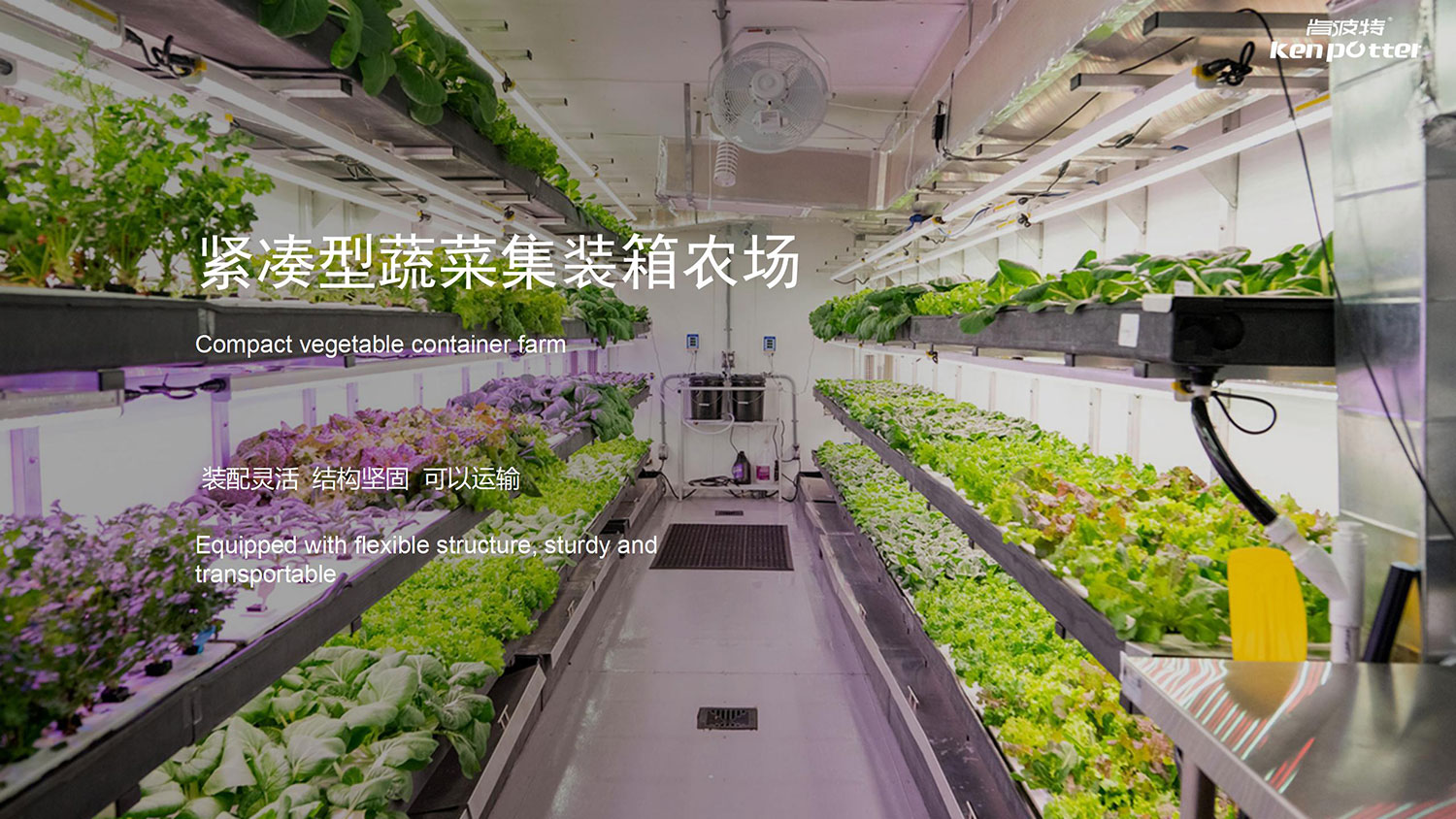
The core colors of the light formula in plant factories primarily consist of red and blue light, supplemented by a small amount of far-red light, ultraviolet light, green light, etc. Different colors of light correspond to different growth needs of crops. Through precise proportioning, the goals of increasing production, improving quality, and controlling the growth cycle can be achieved.
1. Core spectral colors and their functions
1. Red light (wavelength 620–660nm)
- It is the main energy source for plant photosynthesis, directly driving the absorption of light energy by chlorophyll a and chlorophyll b, and promoting the synthesis of carbohydrates.
- Effect: Accelerates plant stem elongation and leaf expansion, enhancing biomass accumulation; crucial for flower bud differentiation, fruit expansion, and sugar accumulation in fruit-bearing vegetables (tomatoes, cucumbers).
- Proportion: Typically accounting for 40%–60% of the total light formula, it serves as the fundamental component of the light formula.
2. Blue light (wavelength 430–470nm)
- It serves as an auxiliary energy source for photosynthesis and regulates plant morphogenesis (photomorphogenesis).
- Effect: It inhibits excessive plant growth, resulting in dwarfed and sturdy plants with thick stems and leaves; promotes chlorophyll synthesis and stomatal opening, enhancing photosynthetic efficiency; significantly improves the freshness and taste of leafy vegetables (lettuce, spinach).
- Proportion: Generally accounting for 20%–40%, it is the most classic basic light formula when paired with red light (the ratio of red to blue light is usually 3:1 to 5:1).
II. Auxiliary spectral colors and functions
1. Far-red light (wavelength 720–740nm)
- It does not directly participate in photosynthesis, but influences the growth cycle and morphology of plants by regulating the ratio of phytochromes within the plant.
- Effect: Shortens the internode length of plants, promotes the germination of lateral branches; accelerates the flowering of long-day crops, extends the vegetative growth period of short-day crops; increases the yield and harvest density of leafy vegetables.
- Application scenario: It is commonly used in light formulas for leafy vegetables and strawberries, with an addition ratio generally not exceeding 10%.
2. Ultraviolet light (UV-A 320–400nm; UV-B 280–320nm)
- The content is extremely low, and its main function is to improve crop quality rather than increase yield.
- Effect: UV-A can promote the synthesis of plant secondary metabolites (such as flavonoids and anthocyanins), enhancing the antioxidant capacity and flavor of vegetables; UV-B needs to be strictly controlled in dosage, as low doses can enhance crop stress resistance, while high doses can burn the plants.
- Proportion: Typically less than 5%, often used in the cultivation of functional vegetables (such as anthocyanin-rich lettuce and health-promoting wild vegetables).
3. Green light (wavelength 500–570nm)
- Traditional views suggest that plants absorb less green light, but recent studies have shown that moderate amounts of green light can penetrate the crop canopy and be absorbed and utilized by lower leaves, thereby enhancing the photosynthetic efficiency of the population.
- Effect: Improves the lighting conditions for lower leaves in multi-layered vertical cultivation, reducing yellowing; makes vegetable leaves brighter in color, enhancing the appearance of the product.
- Proportion: Generally, it accounts for 5%–10% and serves as a supplementary component of the light formula.
III. Reference for light formula color ratio of different crops
Crop type, core color ratio, auxiliary color addition, target effect
Leafy vegetables (lettuce, spinach) Red light: blue light = 3:1~4:1 with a small amount of far-red light. The plants are dwarf and sturdy, the leaves are thick, and the harvest is fast
Fruit and vegetable crops (tomatoes, cucumbers) Red light: Blue light = 5:1~7:1 Far-red light + trace ultraviolet light Promote flower bud differentiation, fruit expansion, and sugar accumulation
Medicinal plants (Salvia miltiorrhiza, Mentha haplocalyx) Red light: Blue light = 2:1~3:1 Moderate UV-A to enhance the content of secondary metabolites (pharmacodynamic components)
Seedling cultivation (various types of seedlings) Red light: Blue light = 1:1~2:1 None The seedlings are robust, with well-developed root systems and strong stress resistance